Wat is een toegelaten biocide?
Johan legt uit: Toelatingen voor biociden
Wat is het Ctgb?
Het Ctgb is het College voor de toelatingen van gewasbeschermingsmiddelen en biociden. Deze organisatie beoordeelt of biociden veilig zijn voor mens, dier en milieu voordat ze worden verkocht. Desinfectiemiddelen mogen alleen verkocht worden met een toelatingsnummer van de Ctgb.
Wat zijn biociden?
Een biocide is een stof of mengsel met minimaal één werkzame stof, dat bestemd is voor het vernietigen, onschadelijk maken of voorkomen van schadelijke en/of ongewenste micro-organismen. Er zijn 22 verschillende soorten toepassingen voor biociden. Zo is er een bactericide, voor het afdoden van bacteriën, een fungicide voor het afdoden van schimmels en een virucide voor het afdoden van virussen.
Officiële toelatingen voor biociden
Hoe herken je een toegelaten middel?
Een toegelaten desinfectiemiddel herkent u aan het 5-cijferige toelatingsnummer met een N. Dit nummer staat vermeld op de verpakking, maar kunt u ook terugvinden in de database van het Ctgb. In deze database vindt u niet alleen de toelatingsnummers, maar ook het wettelijk gebruiksvoorschrift van een biocide.
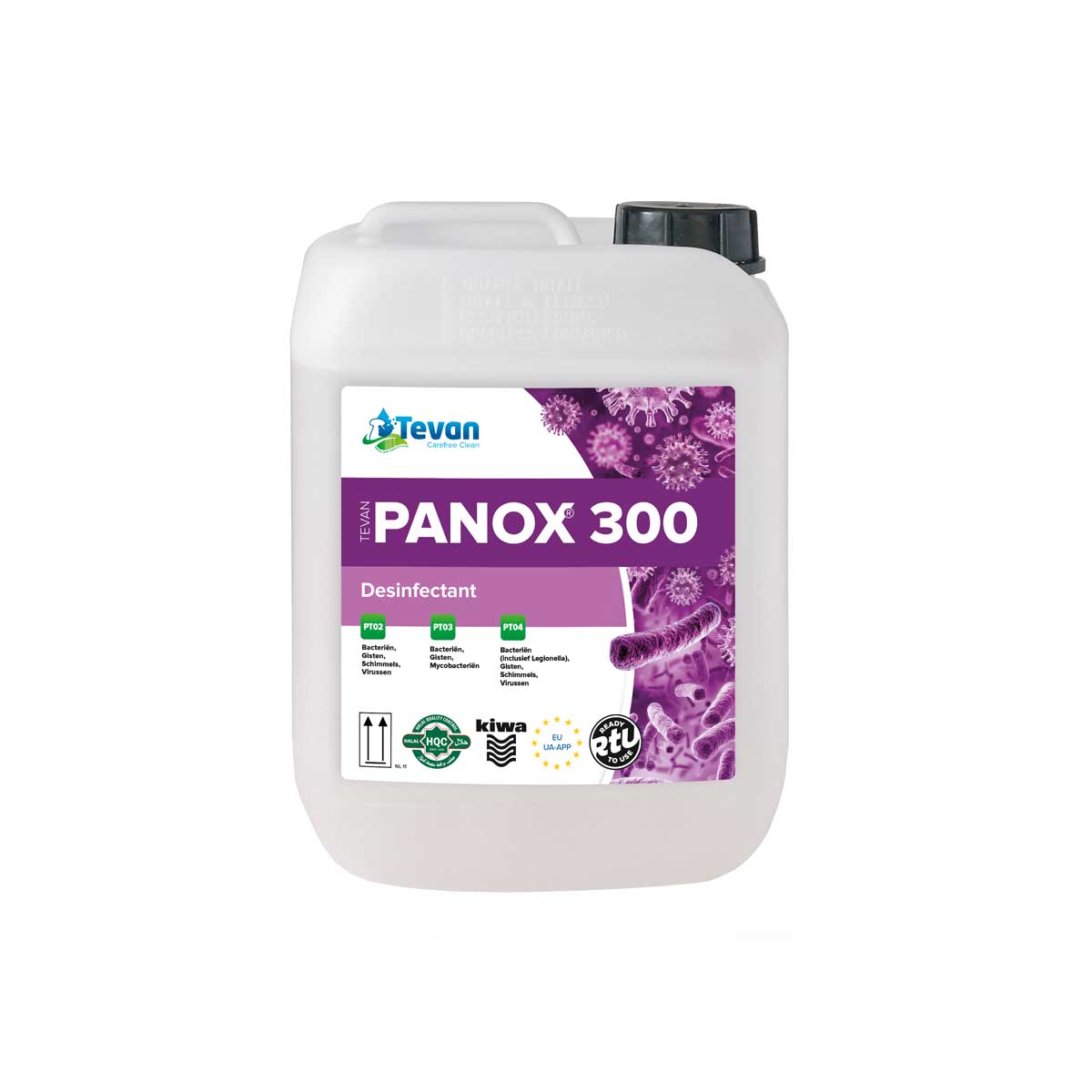
De Tevan Panox productfamilie is toegelaten in de EU, goedgekeurd door het Ctgb en de ECHA met toelatingsnummer EU-0032875-0000.
Wettelijk gebruiksvoorschrift
In het wettelijk gebruiksvoorschrift van een biocide staat beschreven in welke toepassingsgebieden en op welke manier een biocide gebruikt mag worden. Zo zijn sommige biocides wel geschikt voor het afdoden van bacteriën en schimmels, maar niet voor het afdoden van virussen. Bekijk daarom voor u een desinfectiemiddel koopt of het product geschikt is voor uw situatie.
Toepassingsgebieden voor desinfectiemiddelen
Desinfectiemiddelen worden ingedeeld in verschillende toepassingsgebieden. Bij Tevan hebben we een toelating in PT02, PT03 en PT04. Binnen deze toepassingsgebieden zijn er verschillende toepassingen en doelorganismen waarop de biociden beoordeeld worden.
Dit toepassingsgebied staat voor het desinfecteren van oppervlakken. Toepassingen binnen PT02 zijn bijvoorbeeld oppervlakken in zwembaden, gezondheidszorg, industrie en laboratoria en ruimten voor het verblijf van mensen. Doelorganismen die hier invallen zijn bacteriën, gisten, schimmels en virussen.
Dit toepassingsgebied staat voor veterinaire hygiëne-doeleinden. Toepassingen binnen PT03 zijn het bestrijden van bacteriën, gisten, schimmels en virussen op oppervlakken in dierenverblijfplaatsen en andere veterinaire ruimten.
Dit toepassingsgebied staat voor desinfectie in de voedingsindustrie. Toepassingen binnen PT04 zijn bijvoorbeeld het desinfecteren van drinkwatersystemen, installaties in de voedingsindustrie en het desinfecteren van oppervlakken die in aanraking komen met voedsel en grondstoffen voor voedsel. Doelorganismen die hier invallen zijn bacteriën, gisten, schimmels en virussen.

Europese toelating
De Ctgb beoordeelt toelatingen voor biociden in Nederland. Via ECHA, de Europese instantie die toelatingen op Europees niveau beoordeelt, heeft Tevan daarom een Europees dossier ingediend.
Het gedeponeerde productdossier van de Tevan Panox productfamilie is door het Ctgb en de ECHA goedgekeurd en toegelaten binnen de volledige Europese Unie tot 2035.
Met de Europese toelating van de Tevan Panox productfamilie kunt u deze bewezen effectieve desinfecteermiddelen met zekerheid binnen uw werkgebied gaan toepassen:
- Verantwoord werken met een toegelaten biocide binnen de kaders van de wet.
- Vooraf precies weten wat het product kan door bewezen effectiviteittesten.
- Een product met continuïteit voor de komende 10 jaar.
- De volledige Europese Unie kan uw werkgebied zijn.
Risico’s van niet toegelaten middelen
Wanneer u een niet (of tijdelijk) toegelaten middel gebruikt voor het desinfecteren van bijvoorbeeld oppervlakken, brengt dit verschillende risico’s met zich mee. Zo bent u nooit zeker welke schadelijke micro-organismen worden afgedood door het desinfectiemiddel. Hierdoor weet u dus niet of u effectief desinfecteert. Verder is het niet zeker welke schade er kan ontstaan aan uzelf of uw omgeving bij het gebruik van niet (of tijdelijk) toegelaten middelen.

Ook een vraag voor Johan? Stel deze hier en wie weet beantwoordt hij deze in het volgende artikel!